Read Article
About Barnes
Est. 1994
"The transfer of allegiance from paradigm to paradigm is a conversion experience that cannot be forced."
Private internet presence since 1994, exploring and applying internet technologies.
 My name is Bernhard Kreinz, simply known as Barnes. Since the first publication, my focus has been on understanding and applying technologies in the context of the internet. Here you'll find projects dealing with infrastructure, engineering, software development, and knowledge transfer.
1984: Commodore 64 & Acoustic Coupler
1994: Static IP Experiments
1997: Barnes.ch Launch with Webmaster & OKorNOK prototype
2005: OKorNOK.com Launch
2022: Cyber Risk Management (Prototype)
2024: TLCTC.net Launch
The tools change. The mission doesn't: knowledge is good—being able to apply it is better.
EST 1994

OKorNOK
One of the first social network prototypes, conceptualized in 1994. Exploring human connectivity before the platform era.
"Who's coming? Who's not? For all kinds of occasions. Yes, I was here before Facebook—but without entrepreneurship ;-)"
Today, this platform helps me stay proficient and up-to-date across the entire technology stack—knowledge is good, being able to apply knowledge is better.
Playground
A sandbox for frustration, engineering humor, and experimental media.
(Humor module required)
The Jukebox
Audio Engineering Dumps
Visual Rants
Click to Enlarge

CISO Life (blue pill?)
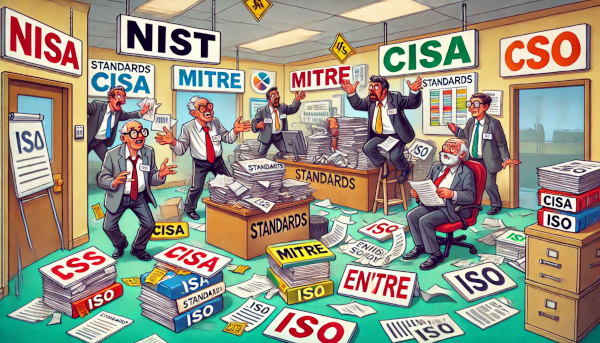
Standards Blues
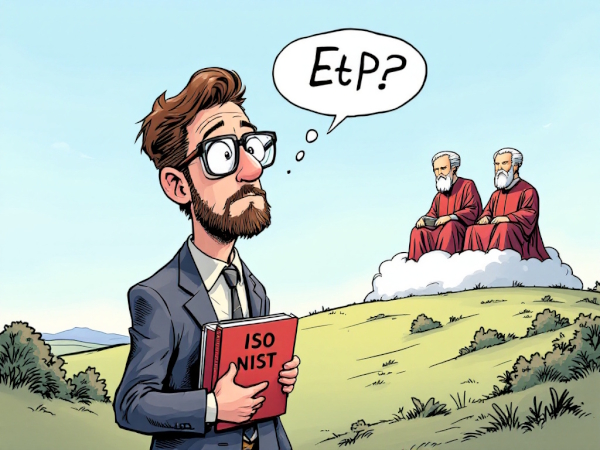
Compliance Driven CISO

David vs Goliath
Motion Picture Archive
Music Video
Video: Old Introduction - First Steps